
Balance your health and your home. Discover our gentle, manageable house cleaning schedule for chronic illness to keep your space peaceful.
The Ultimate Gentle and Manageable House Cleaning Schedule for Chronic Illness
Look, I get it, cleaning after a 10-hour shift is the last thing you want to do, but when you are living with a chronic health condition, the challenge goes so much deeper than just being tired after work. You look at a basket of unfolded laundry or a dusty shelf, and your brain immediately calculates the physical cost. You know that vacuuming the living room today might mean a massive flare-up tomorrow that leaves you stuck in bed for days. The guilt starts creeping in, your home begins to feel heavy, and you just want to completely give up.
Here is the real talk: traditional cleaning advice is not built for bodies that experience chronic pain, fatigue, autoimmune conditions, or mobility limitations. The standard “power through and clean the whole house on Saturday” mentality is flat-out dangerous for your physical well-being. Your living space should be a peaceful sanctuary where you can heal and rest, not a source of constant physical stress and emotional guilt.
At TidyHome.site, we focus on creating structured, stress-free household routines that conform to your actual life—not an unrealistic standard of perfection. By switching to a gentle, manageable house cleaning schedule for chronic illness, you can protect your limited physical energy, preserve your health, and keep your home clean enough to be a comfortable place to live. Let’s look at how to rewrite the housekeeping rules on your own terms.
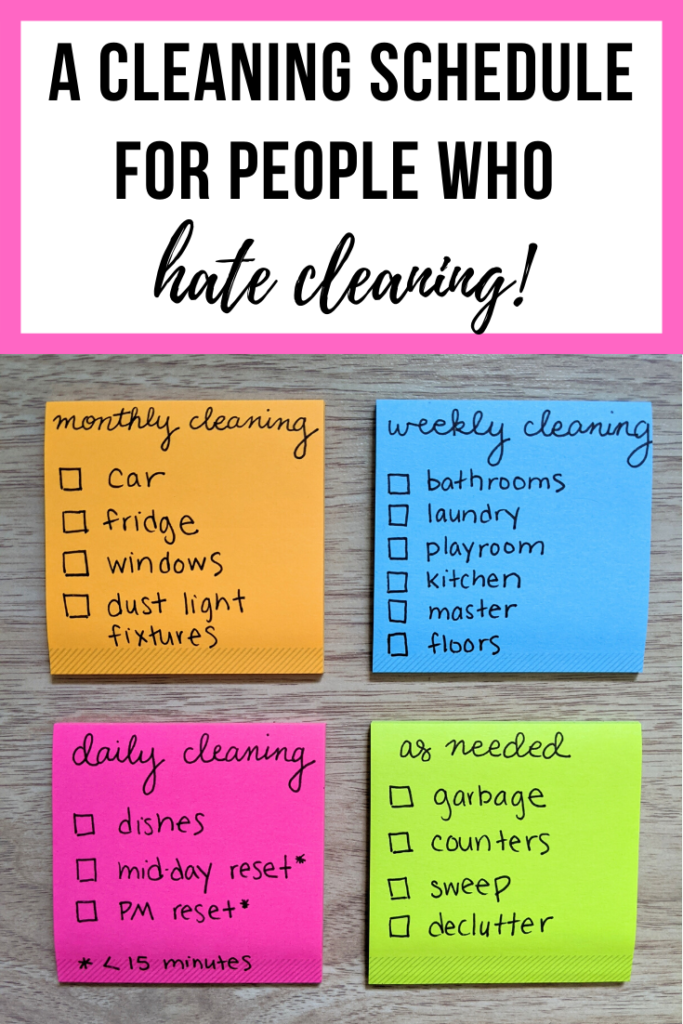
The Spoon Theory of Home Maintenance
If you live with a long-term health condition, you are likely already familiar with Christine Miserandino’s “Spoon Theory.” It is the idea that you wake up every single morning with a limited number of spoons, where each spoon represents a finite unit of physical or mental energy. Taking a shower might cost two spoons, cooking a meal might cost three, and going to work might consume almost all of them.
Traditional house cleaning advice assumes people have an unlimited supply of spoons. The TidyHome.site philosophy is different: we design systems to save your spoons. A realistic house cleaning schedule for chronic illness does not demand that you push through pain. Instead, it teaches you to budget your energy, prioritize the highest-impact tasks, and break chores down into tiny, low-effort micro-movements that don’t trigger a health crash.
The Low-Energy Energy Budget Frequency Table
To prevent your home from reaching a point where it feels completely overwhelming, you need a routine that differentiates between essential hygiene and pure aesthetics. When your spoons are low, you only touch the tasks that protect your health. Everything else can wait for a higher-energy day.
Here is a practical, adaptive breakdown of how to structure your efforts:
| Energy Level | Focus Priority | Essential Tasks | The Chronic Illness Shortcut |
| Low Energy (Flare Days) | Bare Minimum Hygiene | Empty the kitchen sink trash, clear a path to the bathroom. | Use disposable wipes and drop-in toilet cleaners. Zero heavy lifting. |
| Medium Energy (Baseline Days) | The High-Visibility Areas | Wipe kitchen counters, clear bedside tables, run a lightweight static sweeper. | Sit on a rolling stool while wiping down low surfaces. |
| High Energy (Good Days) | The Catch-Up Sprint | Change the bed linens, vacuum high-traffic rugs, wash a load of laundry. | Work in strict 10-minute blocks with 20-minute rest breaks. |
Step-by-Step Guide to Creating an Adaptive Cleaning Schedule
Ready to take back your space without sacrificing your health? Throw out the standard rulebook, grab a comfortable seat, and let’s walk through this detailed, step-by-step guide to setting up an adaptive routine that respects your body.
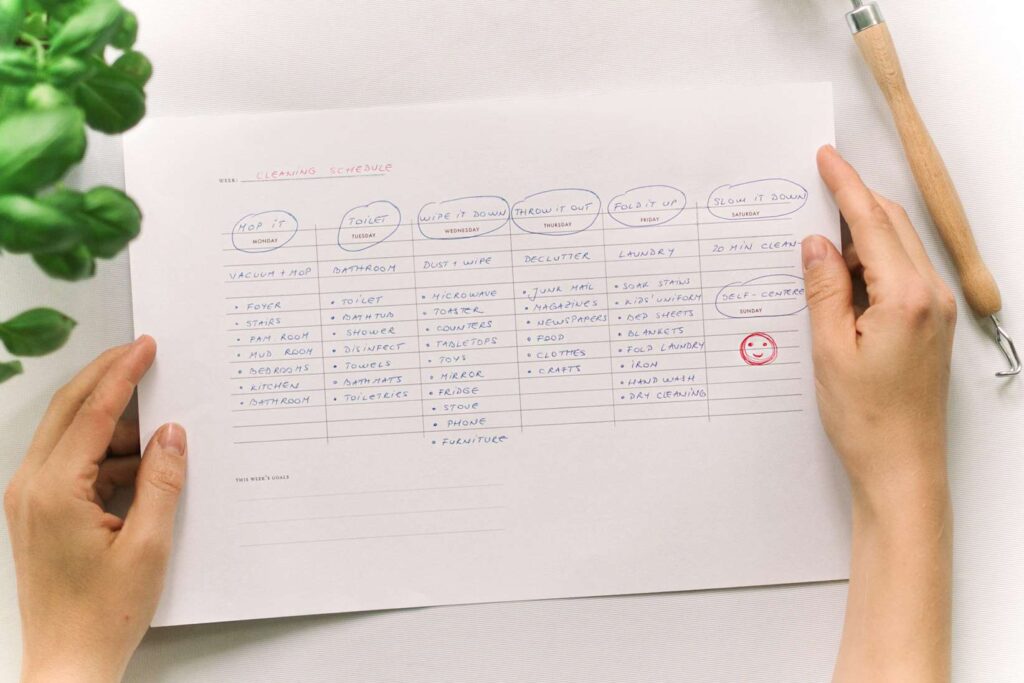
Step 1: Define Your “Minimum Viable Cleanliness”
The very first step is to completely lower your expectations of what a clean house looks like. Forget about sparkling baseboards and perfectly organized pantries. Ask yourself: what are the absolute fewest things that need to happen for my home to remain hygienic and safe? Usually, this comes down to keeping food surfaces wiped down to prevent bugs, keeping walking paths clear of tripping hazards, and making sure you have clean dishes and underwear. Everything else is a bonus. Once you identify this baseline, give yourself permission to ignore the rest on bad days.
Step 2: Set Up Micro-Stations and Task-Batching
Do not carry heavy cleaning products across the house. That uses up valuable spoons before you even begin cleanning. Instead, set up micro-stations. Keep a package of disinfecting wipes and a bottle of multi-surface spray in every single room. If you notice a smudge on the bathroom sink while brushing your teeth, you can quickly wipe it down right then and there because the supplies are already within arm’s reach. Task-batching means you do similar tasks together to save your energy. For instance, if you are already standing in the kitchen waiting for water to boil, use those two minutes to unload three clean forks from the dishwasher.
Step 3: Implement the 10-Minute Pacing Rule
When you experience a burst of good energy on a “good day,” the natural temptation is to try and clean the entire house at once to make up for lost time. This is a trap called the “boom-and-bust cycle,” and it almost always leads to a painful flare-up. Break this cycle by implementing strict pacing rules. Set a timer on your phone for ten minutes. Work at a gentle, slow pace until the timer dings. When it goes off, you must sit down and rest for twenty minutes, even if you feel perfectly fine. Pacing ensures your energy levels remain stable throughout the day.
Step 4: Automate and Tool-Up Your Environment
If a tool can do the work for you, let it. Invest in lightweight, ergonomic cleaning equipment that takes the physical strain off your joints. Long-handled dusters mean you don’t have to stretch or bend down, which protects your lower back. A lightweight cordless vacuum or a robot vacuum completely changes the game for floor care. If you struggle to lift heavy laundry baskets, switch to a rolling hamper that you can easily push from your bedroom to the washing machine without any lifting at all.
Pro Tip: Keep a rolling stool or a comfortable folding chair in your kitchen and bathroom! Sitting down while you wash dishes, prep food, or wipe down counter surfaces can save up to 50% of your daily standing energy.
Overcoming Guilt and Managing Expectations
The hardest part of implementing a manageable house cleaning schedule for chronic illness isn’t the physical labor—it is the mental battle against the guilt of not doing enough. Here is the real talk on how to protect your mental health while managing your home.
Change Your Language Around Clutter
Your home is not a reflection of your worth as a human being. It is simply a container for your life, and right now, your body requires more care than your furniture does. Stop using judgmental words like “lazy” or “messy” when you look at an untidy room. Instead, reframe it neutrally: “My home is currently reflecting a low-energy week, and that is exactly what it is supposed to do to protect my health.”
Accept and Delegate Outside Help
If you live with family members or roommates, it is time to have a direct, empathetic conversation about your physical limitations. Share the Spoon Theory with them so they can visually understand how your energy works. If you live alone and can stretch your budget, consider hiring a local cleaning service once a month just to handle the deep heavy tasks, like scrubbing the bathtub or washing the floors. Outsourcing these high-intensity chores leaves you with more spoons for daily life.
Forgive the Unfinished Task
If you start a chore and your body suddenly signals that it is hitting a wall, stop immediately. It is completely okay to leave a vacuum cleaner sitting in the middle of the hallway or a half-loaded dishwasher open until tomorrow. The dust will still be there when your energy returns, but your health is irreplaceable.
Reclaim Your Space and Peace with TidyHome.site
Living with a chronic illness means your life requires constant adaptation, and your home management strategy should be no exception. By stepping away from perfectionism and embracing a flexible, gentle approach, you can maintain a comfortable, organized environment that serves as a safe haven for your healing process. A sustainable house routine shouldn’t exhaust you; it should support you.
You don’t have to navigate these daily household challenges entirely on your own. At TidyHome.site, we are completely committed to creating realistic, stress-free home management solutions that respect the messy, unpredictable realities of actual human health.
If you are ready to stop feeling overwhelmed by chores and start managing your home with total kindness toward your body, we are here to support you. Visit TidyHome.site today to download our free, adaptive cleaning templates, subscribe to our gentle weekly schedule checklist, and explore highly customized routines designed to keep your home comfortable without the physical stress. Let’s make home care feel gentle, realistic, and completely achievable together!